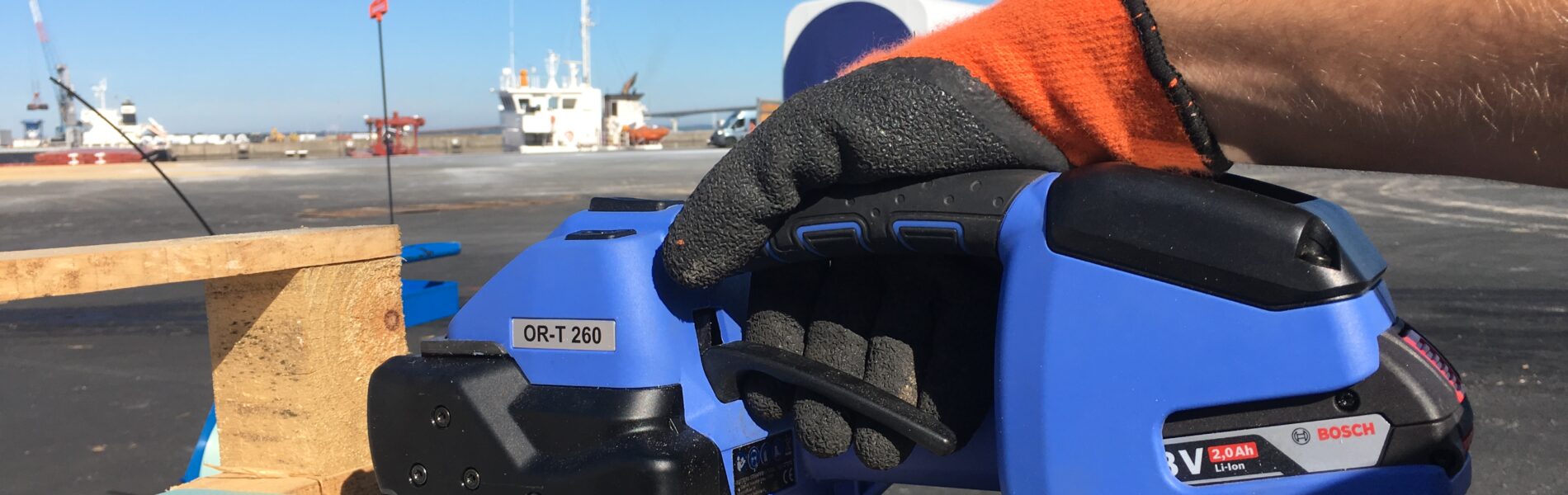
Choosing the right strapping tool depends on the strap material, load weight, required tension and number of strapping operations performed each day. Manual, battery-powered and pneumatic tools each meet different production and handling requirements.
This guide compares seven strapping tool options for PP, PET, textile, composite and steel straps. It will help you select equipment suited to your loads, working environment and production rate.
Contents
7 Strapping Tool Options Compared
Before selecting a strapping tool, consider the strap material, width, load shape, required tension and frequency of use. The following seven categories cover the main industrial strapping applications.
1. Manual Strap Tensioners
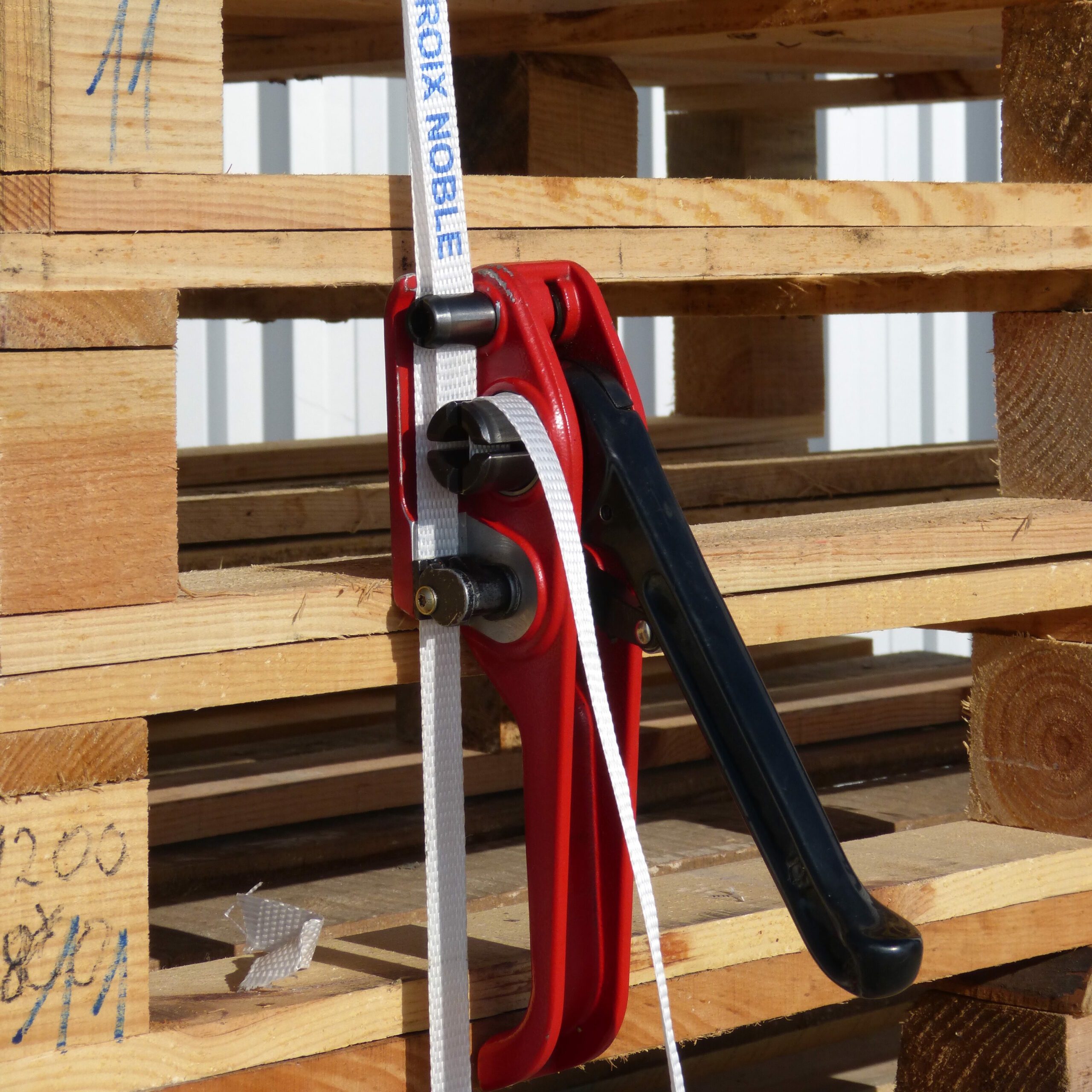
Manual strap tensioners provide a practical solution for occasional or low-volume strapping. They tension the strap mechanically and are generally used with buckles or seals. Models must be selected according to the strap material, width, load shape and required tension. Tools such as the RP100, RP112, RP25, RP50 and RP55 cover different PP, PET, woven, composite and hot-melt strap applications.
2. Separate Friction Welders
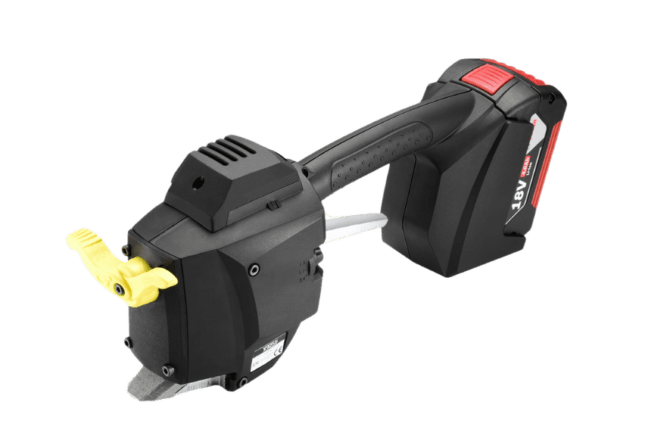
A separate friction welder seals PP or PET strap after tension has been applied with a manual tensioner. It removes the need for metal seals by creating a controlled friction weld between the strap surfaces. This two-tool solution is suitable for low to moderate production rates. Always confirm that the welder is compatible with the selected strap material, width and thickness.
3. Battery-Powered Friction Strapping Tools
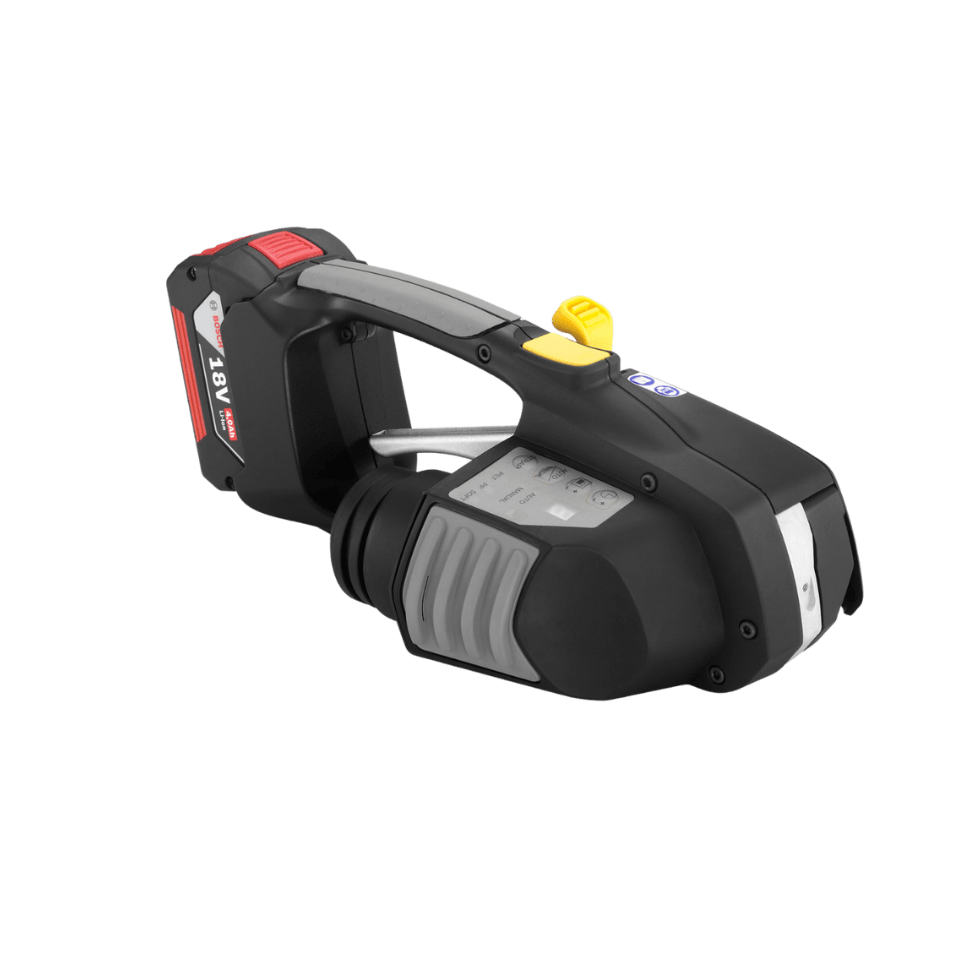
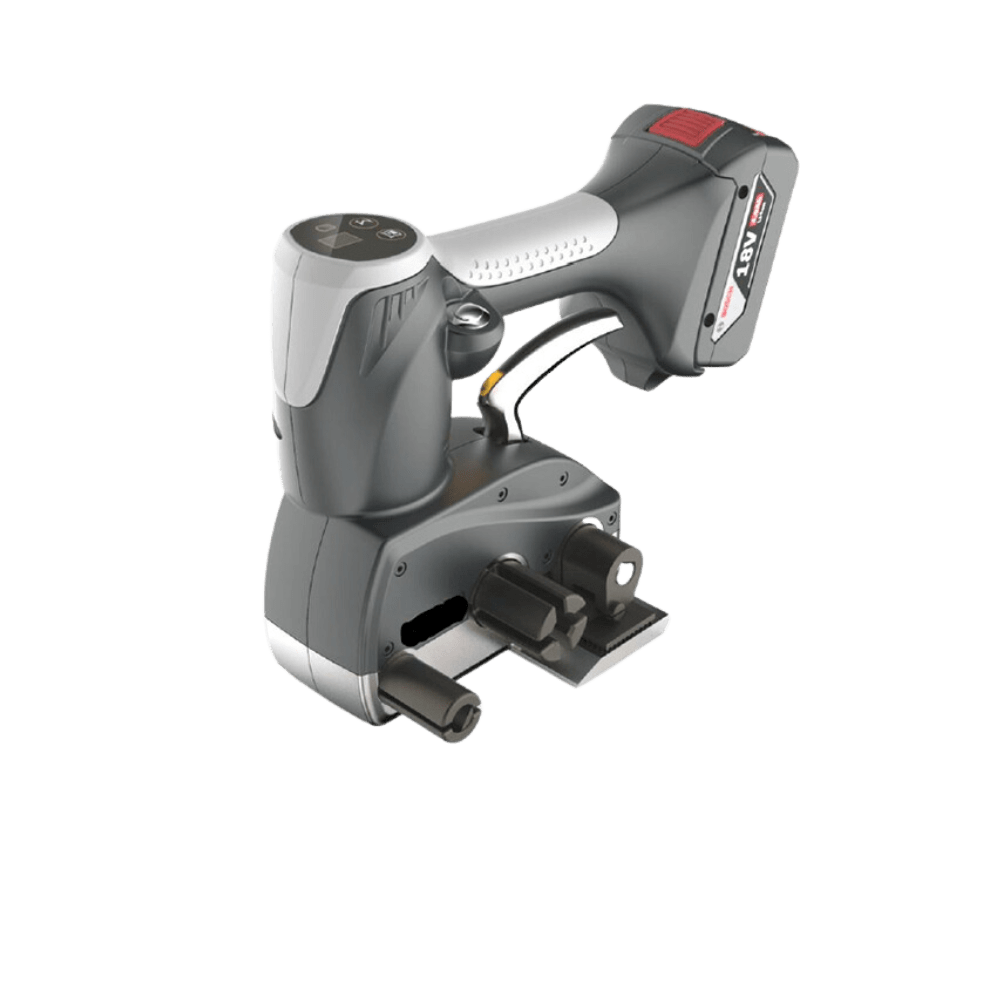
Battery-powered friction strapping tools combine tensioning, welding and cutting in one portable unit. They are suitable for regular or intensive PP and PET strapping operations and provide more consistent settings than fully manual equipment. Models such as the X12, X25 and X40 accommodate different strap widths. Select the model according to the manufacturer’s strap compatibility and tension specifications.
4. Pneumatic Strapping Tools
Pneumatic strapping tools use compressed air to support repetitive or high-tension industrial operations. They can reduce operator effort when securing heavy or demanding loads. Their suitability depends on the strap material, required tension, available air supply and working environment. Check the technical specifications before selecting a pneumatic model.
5. Textile Strap Tools
Textile strap tools are designed for woven, composite and hot-melt straps. Depending on production volume and required tension, these straps can be applied with manual or pneumatic equipment. They are commonly used for irregular loads, timber, construction materials and products requiring a flexible securing solution.
6. Steel Strap Tensioners and Sealers
Steel strap requires dedicated tensioners, sealers or combination tools. The appropriate strapping tool depends on the strap width and thickness, the shape of the load and the chosen joint method. Combination tools can tension, seal and cut the strap in a single operation. Operators must follow the manufacturer’s safety instructions and use appropriate protective equipment.
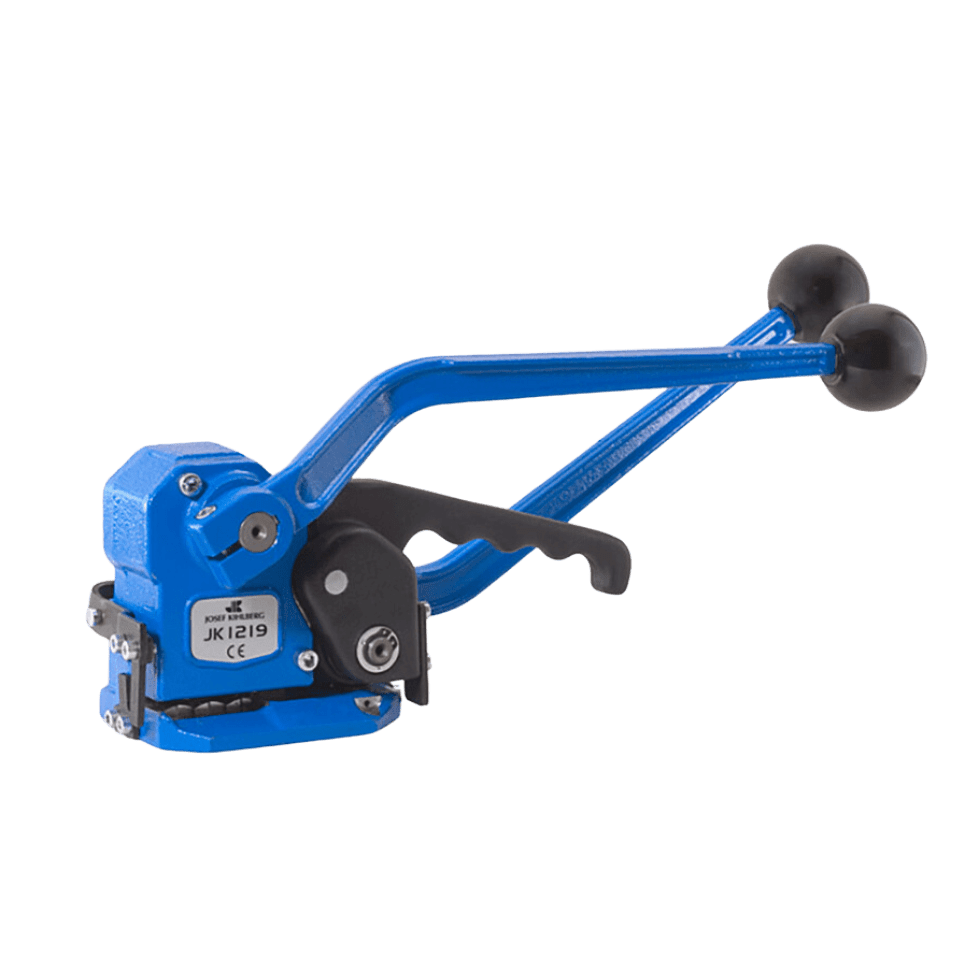
It can be used both horizontally and vertically, providing better quality strapping for different strap widths, depending on the model used. What’s more, it eliminates the need to use shears for steel strap, as it is equipped with a knife for cutting the strap.
7. Steel Strap Shears
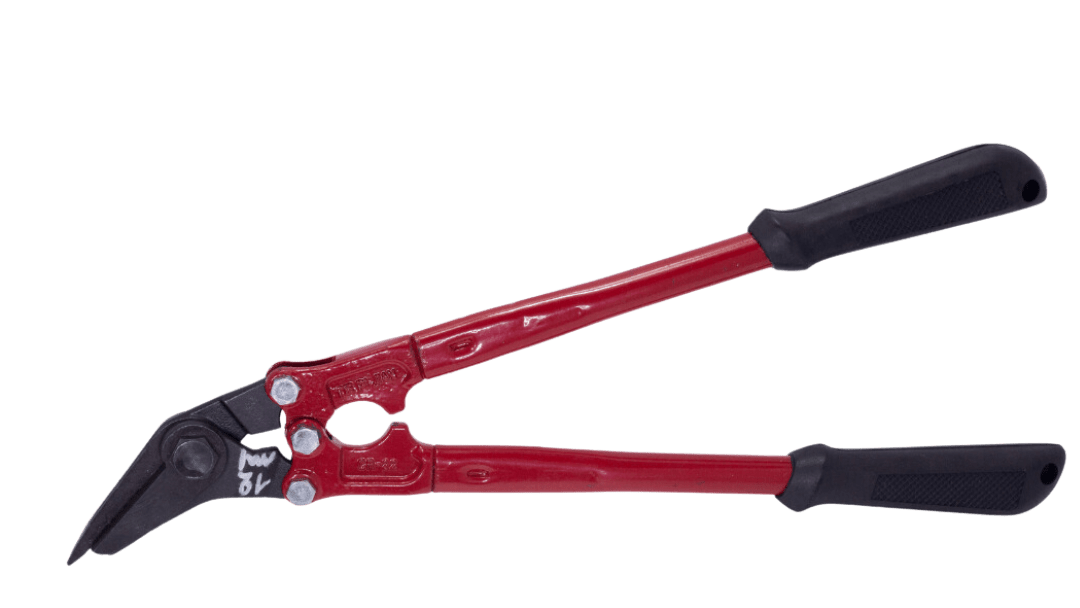
Steel strap must be cut with purpose-designed shears. Standard shears are selected according to strap width and thickness, while anti-release models help control the strap during cutting. Reversible-blade shears can also reduce the effort required. Never cut tensioned steel strap without following the correct release procedure.
How to Select a Strapping Tool for Your Load
Load weight alone is not enough to determine the correct equipment. Consider the strap material, number of straps, load stability, edge conditions, transport method and required production rate. Technical load capacities must always be confirmed using the strap and tool manufacturers’ specifications.
| Application | Suitable straps | Possible tools | Pallet weight | Strap width |
|---|---|---|---|---|
| Wood pallet | Hotmelt Composite Woven PET PP | Manual strapping tools Friction strapping machines Pneumatic strapping machines | 400 kg 600 kg 1000 kg | 13 mm 16 mm 19 mm |
| Metal pallet | Composite Woven PET | Manual strapping tools Friction strapping machines Pneumatic strapping machines | 400 kg 600 kg 1000 kg | 13 mm 16 mm 19 mm |
| Stone/concrete pallet (Materials) | Composite Woven PET | Manual strapping tools Friction strapping machines Pneumatic strapping machines | 400 kg 600 kg 1000 kg | 16 mm 16 mm 19 mm |
| Cardboard pallet | PET PP | Friction strapping machines | 300 kg 600 kg 800 kg | 13 mm 16 mm 19 mm |
| Logistics | Paper PET PP | Friction strapping machines | coils < 20 kg 300 kg 600 kg 800 kg | 12 mm paper 13 mm 16 mm 19 mm |
Selecting the right strapping tool improves consistency, productivity and operator comfort while helping control material consumption. The final choice must be based on the strap, load, working environment and production rate rather than on load weight alone.
For guidance on reducing physical and musculoskeletal risks at work, consult the EU-OSHA resources on musculoskeletal disorders.
Contact La Croix Noble with your strap type, dimensions, daily volume and load characteristics. Our specialists will help you identify a suitable manual, battery-powered or pneumatic strapping tool.